Understanding Braid & Part Sizes:
Choosing the Best Style for Your Hair
When booking a braiding appointment, one of the most important decisions is choosing the right braid size and parting size.
These factors affect not only the look of your style but also its longevity, maintenance, and how it protects your natural hair. In this guide, we’ll break down braid and part sizes to help you make the best choice for your hair type and lifestyle.
Braid Sizes Explained
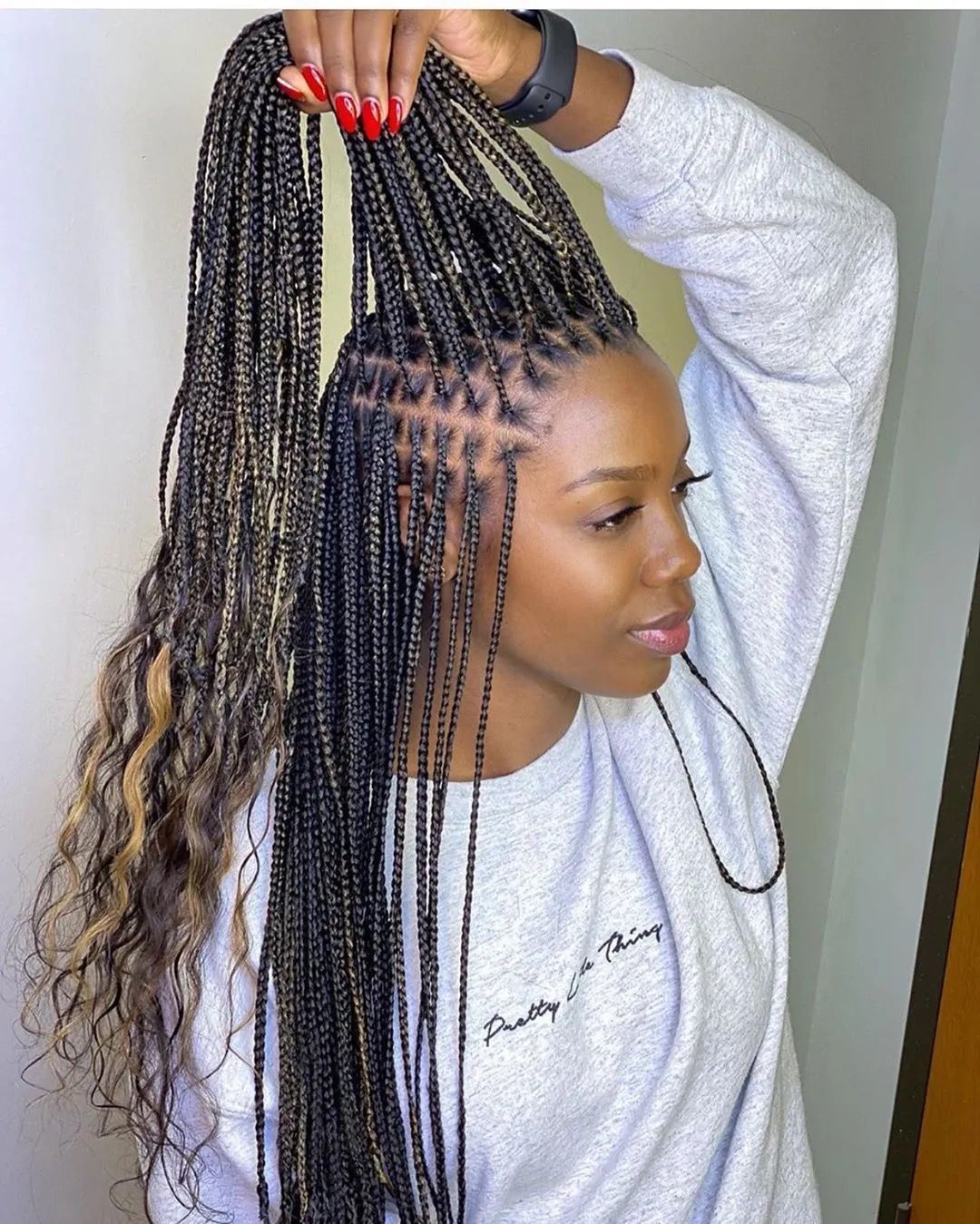
1. Small Braids
- Description: Thin, lightweight, and more flexible.
- Pros: Last longer (6-8 weeks), allow for more styling versatility, and create a fuller look.
- Cons: Take longer to install and remove.
2. Medium Braids
- Description: A balance between small and large braids.
- Pros: Ideal for those who want a stylish but time-efficient install. Moderate longevity (4-6 weeks).
- Cons: Not as full as small braids, but still versatile.
3. Large Braids
- Description: Bigger, chunkier braids that make a bold statement.
- Pros: Faster installation (2-4 hours), great for temporary styles, and low tension on the scalp.
- Cons: Don’t last as long (2-4 weeks), may not be as versatile for styling.
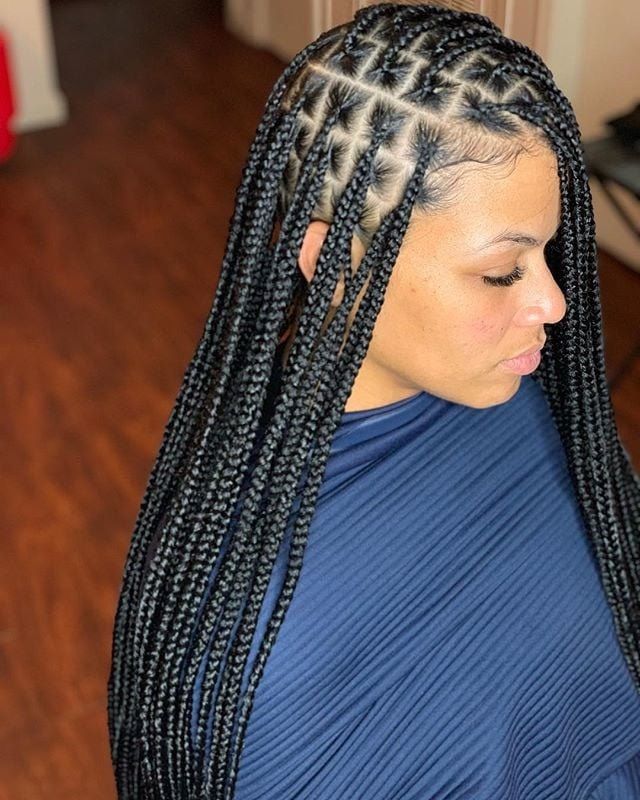
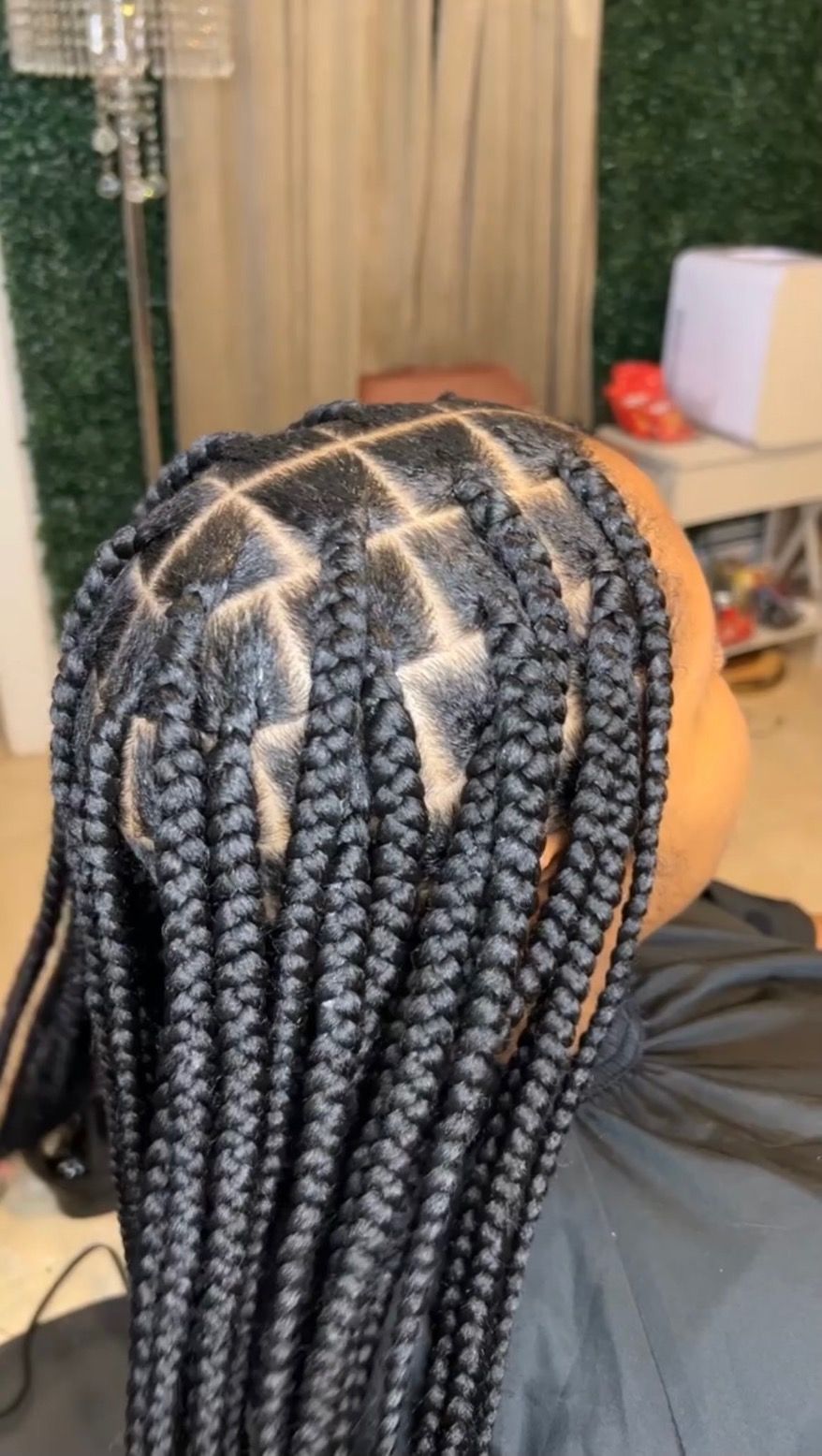
How Part Size Affects Your Style
- Small Parts: Provide a fuller look and help distribute the weight of small braids evenly, reducing tension.
- Medium Parts: Offer a balanced look that’s not too full or too spaced out.
- Large Parts: Create a bold, defined look but can leave more scalp exposed.
Your hair density plays a role in how parting sizes work. If you have thick hair, small or medium parts help control volume. If you have fine or thin hair, larger parts can prevent excess scalp exposure.
Knotless Box Braids: The Scalp-Friendly Choice
Knotless box braids have become a favorite because they offer a lightweight, tension-free alternative to traditional box braids. Unlike regular box braids, which start with a tight knot at the root, knotless braids begin with your natural hair and gradually add extensions for a seamless, natural-looking finish.
Why Choose Knotless Braids?
- Less tension on the scalp – Ideal for sensitive scalps or thin edges.
- Natural movement – The braids feel lighter and look more natural.
- Longer-lasting comfort – Easier to style and wear for an extended time.
Part Size & Knotless Braids
- Small knotless braids with small parts create a fuller, more natural look.
- Medium knotless braids with medium parts offer a perfect balance between fullness and styling versatility.
- Large knotless braids with larger parts give a bold look but may not last as long as smaller sizes.
How Many Rows Do You Need?
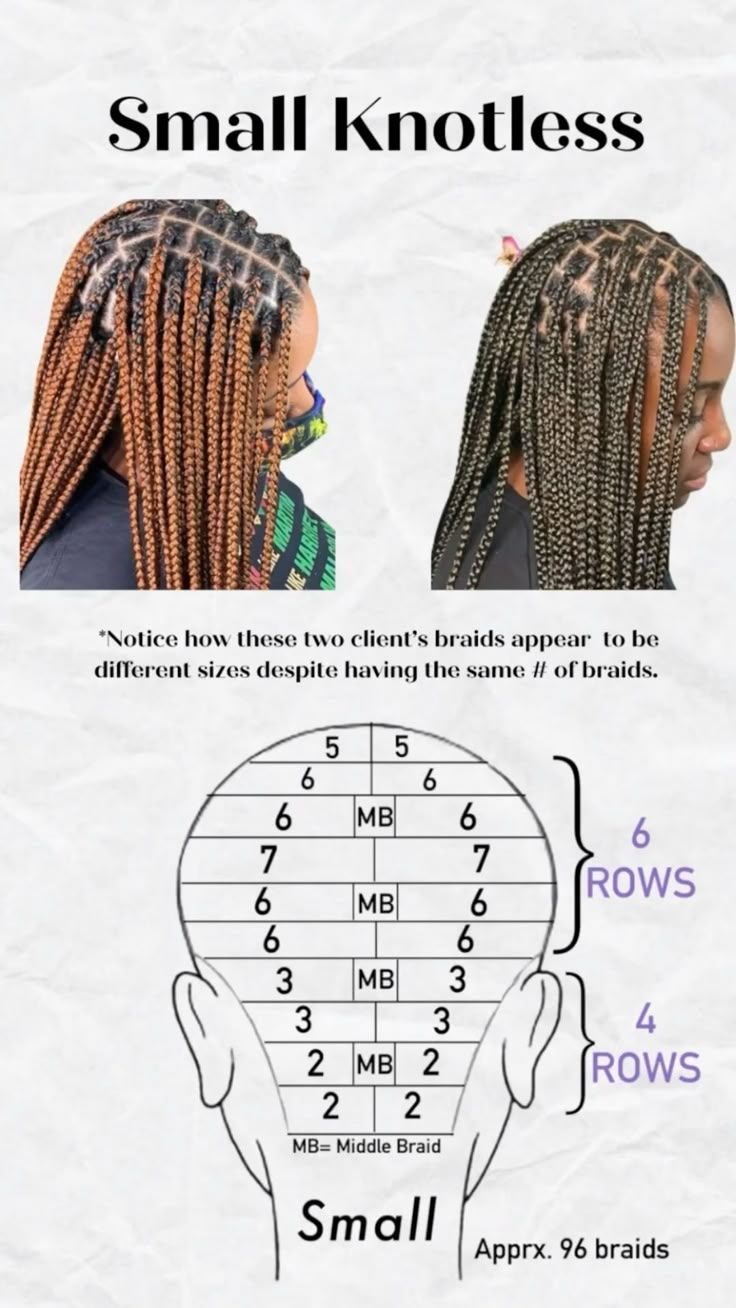
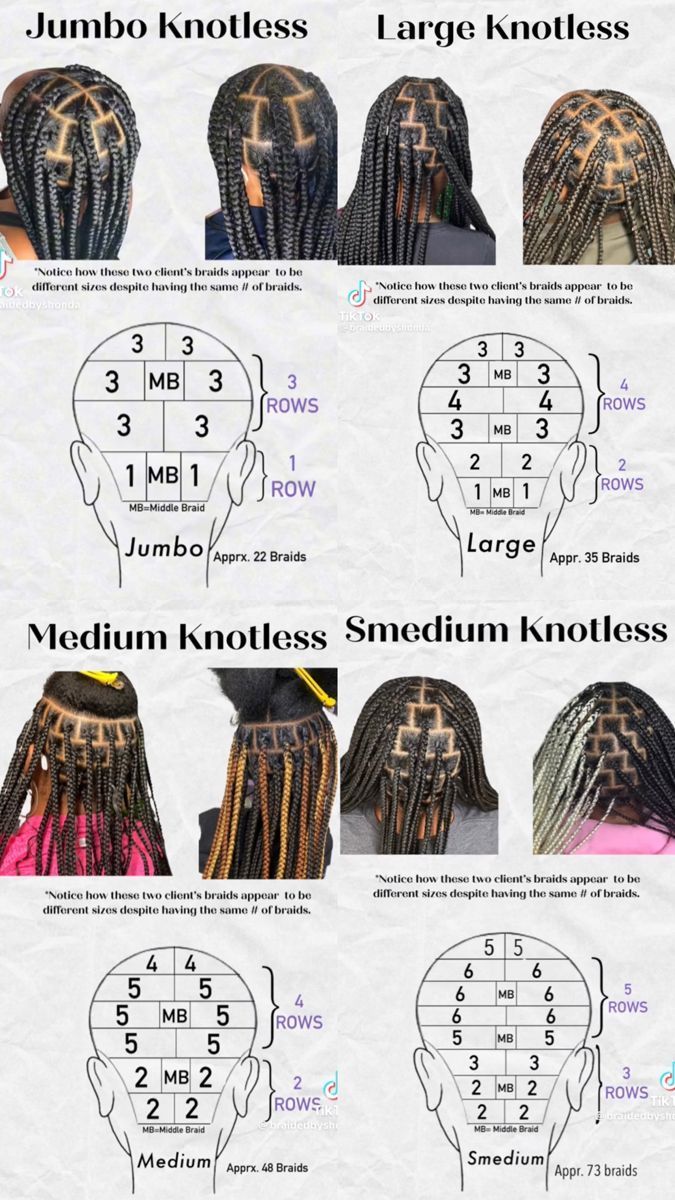
The number of braid rows varies depending on the braid size, parting size, and head shape. Here’s a general guideline:
Estimated Number of Rows for Different Braid Sizes at Braids by Faith (BbF)
- Small Braids (Including Small Knotless Braids)
- Rows: 7 (meaning 14 braids from ear to ear)
- Columns (per row): 10–15 (depends on head size and density)
- Total estimated braids: 120–200+
- Best for: Fuller, longer-lasting styles with maximum versatility.
2. Smedium Braids (Including Smedium Knotless Braids)
- Rows: 6 (meaning 12 braids from ear to ear)
- Columns (per row): Approximately 9–13 (varies with head size and density)
- Total estimated braids: Around 100–160 (approximate)
- Best for: A balanced style offering slightly less density than small braids while providing more volume than medium braids.
3. Medium Braids (Including Medium Knotless Braids)
- Rows: 5 (meaning 10 braids from ear to ear)
- Columns (per row): 8–12
- Total estimated braids: 80–120
- Best for: A balanced look that’s not too full but still offers styling flexibility.
4. Large Braids (Including Large Knotless Braids)
- Rows: 4 (meaning 8 braids from ear to ear)
- Columns (per row): 8–10
- Total estimated braids: 30–50
- Best for: A bold, statement look with quicker installation time.
5. Extra Large/Jumbo Braids
- Rows: 2–3 meaning 4-6 braids from ear to ear)
- Columns (per row): 3–6
- Total estimated braids: 15–30
- Best for: A quick, trendy style with minimal scalp coverage.
Factors That Affect the Number of Rows:
- Head size & shape: A larger head may require additional rows for a balanced look.
- Hair density: Thicker hair might need smaller parting to ensure even braid distribution.
- Desired fullness: More rows and smaller parts create a fuller style, while fewer rows create a more spaced-out look.
- Scalp protection: For fine or sensitive scalps, larger parts with fewer rows help reduce tension.
Choosing the Best Braid & Part Size for You:
- For longevity & fullness: Small braids with small parts.
- For balance & manageability: Medium braids with medium parts.
- For quick & bold looks: Large braids with large parts.
- For protective styling: Knotless braids with medium to large parts to reduce tension.
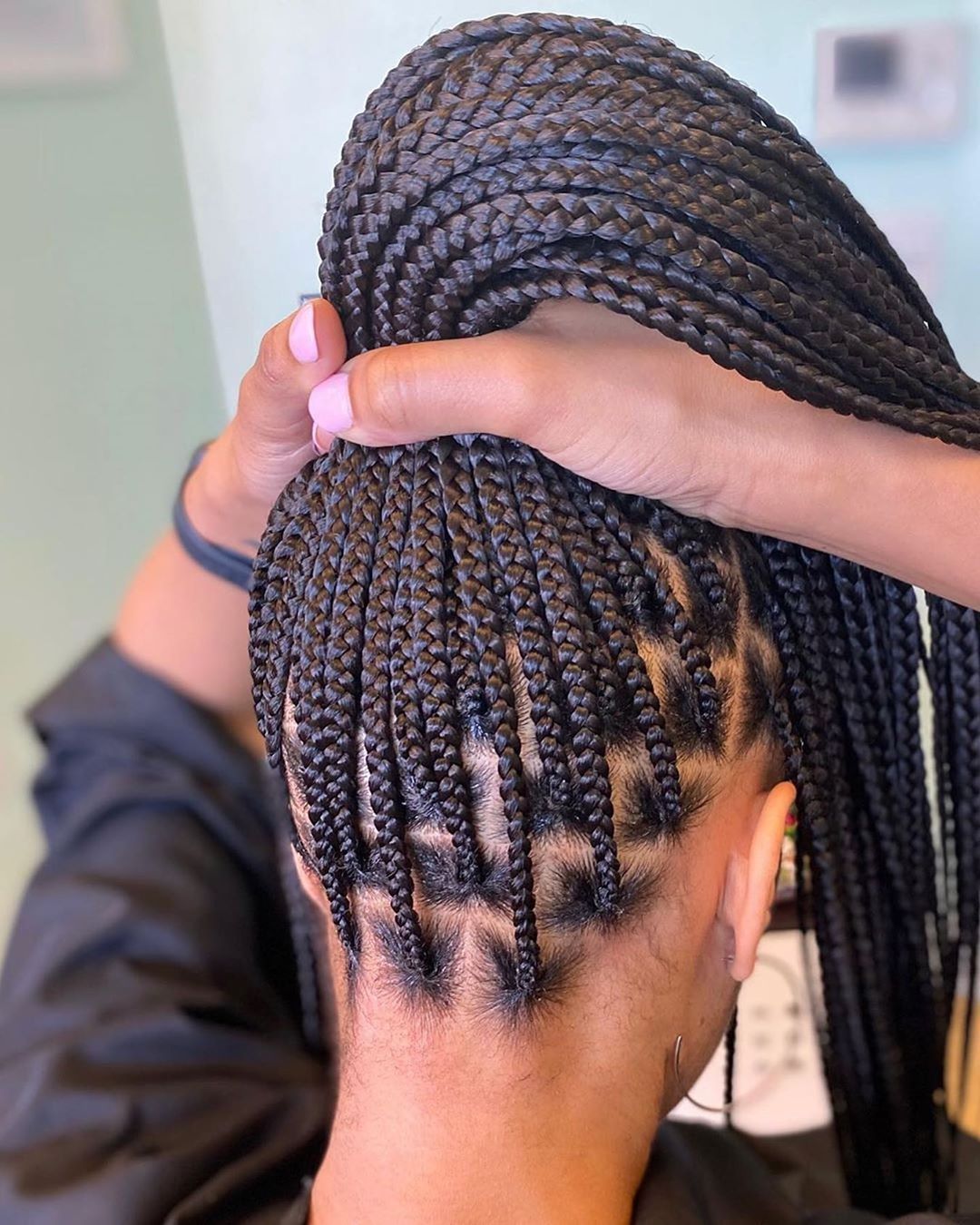
Box/Square Braids:
- Description: Box braids get their name from the “boxy” or square sections of hair that are created when parting the hair. Each section is defined and uniform, which leads to neat, consistent braids.
- Effect on Style: The clean, geometric lines of box braids offer a structured look. They tend to be versatile, allowing for various braid sizes (small, smedium, or large) and are popular for their longevity and protective qualities.
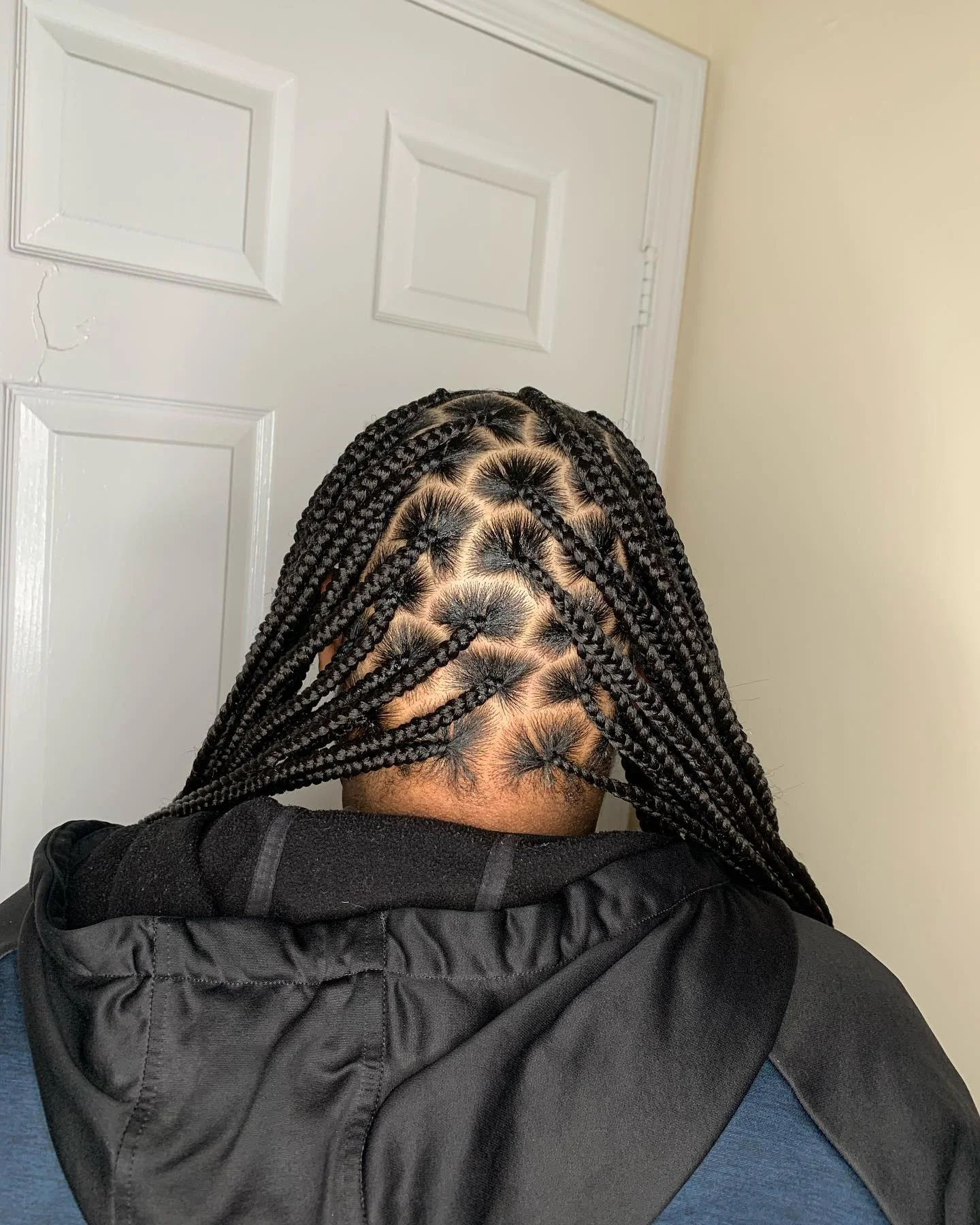
Oval Parting:
- Description: Oval parting refers to a pattern where the hair is sectioned in an oval shape or arranged so that the overall braid formation follows an oval contour. This is often used to frame the face gracefully.
- Effect on Style: An oval part can soften the look of the hairstyle by creating curves that follow the natural shape of the head. It’s a great choice if you want fuller braids and to accentuate facial features while still enjoying the benefits of protective braiding.
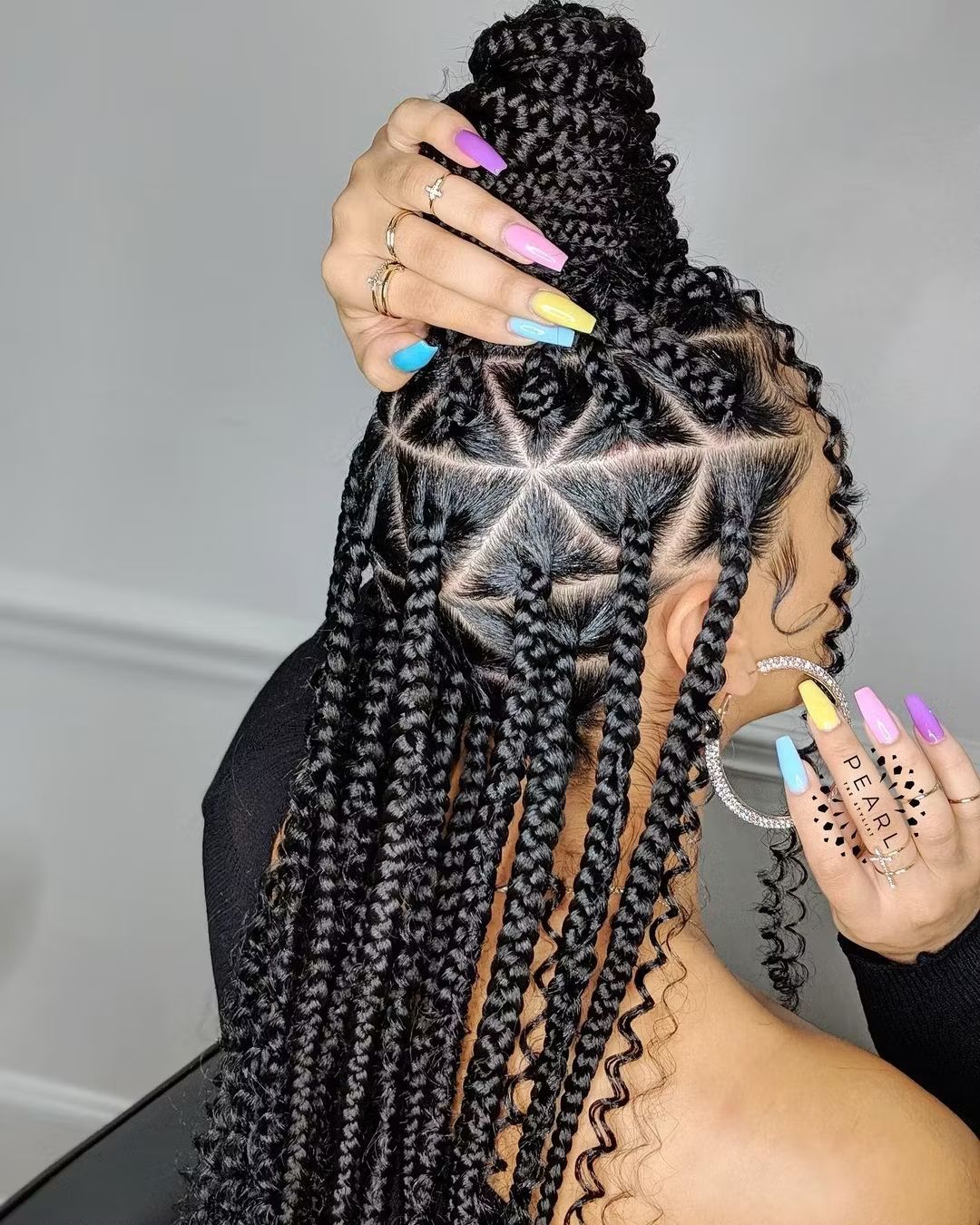
Triangle Parting:
- Description: Triangle parting is less common but creates a striking, angular design. Here, the sections might be arranged in triangular formations—either as part of an overall cornrow design or as individual braid patterns.
- Effect on Style: The angular lines of triangle partings can add a modern and edgy twist to traditional braids. They often serve as an artistic accent, drawing attention to the geometric interplay of lines and spaces on the scalp.
Customization and Creativity:
- Mixing Shapes: Many stylists combine these geometric patterns to create custom looks. For example, you might see a hairstyle that uses a combination of square (box) parts on the sides and a curved, oval part in the front, or even interlocking triangular designs throughout.
- Considerations: The choice of parting isn’t just about aesthetics—it can also impact how the weight of the braids is distributed across the scalp. Uniform, well-planned partings help ensure even tension, which is key for scalp health and the longevity of the style.
Ultimately, the choice between oval, triangle, box, or square partings depends on your desired look, hair type, and even your head shape. At Braids by Faith Luxury Salon, our stylists assess these factors to create a design that’s not only visually stunning but also comfortable and protective for your natural hair.
If you’d like to experiment with these geometric styles or have a specific design in mind, let’s chat further to create the perfect, personalized braid for you!
At Braids by Faith VIP Salon, we assess your hair type, scalp health, and personal preferences to help you choose the best size for your braids. Whether you want traditional box braids or knotless braids, we ensure a flawless, long-lasting, and protective style.
Ready for your next braid appointment? Book with us today!